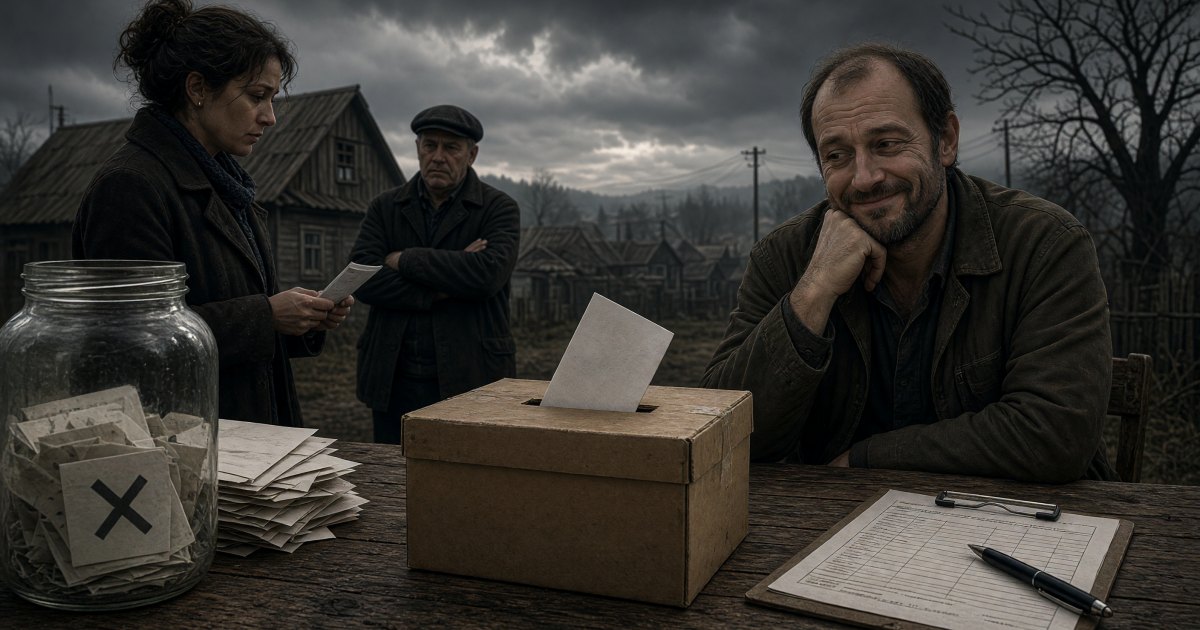
The guarantee
There will be election fraud. I guarantee it. Somewhere, a ballot will be wrong, a signature will be sloppy, and a cable host will treat it like the fall of Rome.
The guarantee is the easy part. Human beings run elections. Human beings also misfile taxes, marry the wrong cousin at the family reunion, and swear the stove was off. A system that touches tens of millions of envelopes, machines, poll books, and tired volunteers is going to produce a mistake. The performance is pretending that a mistake is a coup.
By the time the first precinct reports, the script is already written. A blurry photo of a ballot box. A cousin who heard something at the grocery store. A lawyer who has been on television so long the chyron might as well be tattooed on. The audience is not there for the count. The audience is there for the feeling that the count was stolen from them personally.
The crime wave
Somebody might vote in the wrong district on a relative’s ballot. Maybe one greencard holder votes by mistake, checks a box, and goes home thinking the form was for them. Fine. It happens. People also put the milk in the cupboard. Civilization has survived worse paperwork.
That is the whole crime wave, once you strip off the music. A person uses a ballot that was not theirs because the household mail looks the same and nobody in the kitchen is a statutes professor. A noncitizen who is allowed to live here, work here, and pay taxes here fills out the wrong form because the form looks like every other form the government has ever mailed. Neither of those is a master plan. Neither of those requires a war room, a donor list, or a man in a suit announcing that democracy died at 11:43 p.m. in a church basement.
Fraud, in the version that gets shouted, is organized. It has bosses, mules, late-night drops, and a result that always lands on the other team. The version that actually turns up, when anyone bothers to finish the sentence, is clerical. A name in the wrong book. A signature that does not match because the voter had a stroke, or got old, or signs like a doctor. A ballot cast by someone who should not have cast it, found later, in a pile small enough to fit in a desk drawer.
Call the clerical stuff what it is. It is illegal when the law says it is illegal. Charge it. Fix the form. Train the poll worker. Then go home. The country does not need a national myth about a handful of bad envelopes.
The hunt
The right has been looking for this fraud for ages. Not a season. Not one sour election night. Ages. Hearings, affidavits, “just asking questions,” door-to-door canvasses, private investigators with ring lights, and a small industry of people whose job is to keep the search feeling urgent after the last search came up thin.
Every cycle the same promise shows up wearing a cleaner suit. This time the evidence is overwhelming. This time the tapes, the spreadsheets, the whistleblowers, the statistical “anomalies” that turn out to be people voting after work. Committees are stood up. Hotlines are announced. Volunteers are told they are the last line between the republic and the void. Then the cases get filed, the cases get laughed at or narrowed to something dull, and the republic is somehow still there, rude as ever.
What survives the search is almost never the movie. It is the same small mess: a double vote here, a dead registrant’s name that should have been cleaned years ago, a noncitizen who should not have been handed a ballot, a worker who cut a corner. Real enough to prosecute when proved. Small enough that the people selling the movie have to change the subject before the credits.
Two years of looking
After two years under Trump of looking, not much came out. Two years is not a weekend hobby. Two years is the federal government, with the attention of a president who has treated this as the central wound of American politics, pointed at ballots, voter rolls, and whoever was supposed to have rigged the last one. Allies in office. Allies with subpoenas. Allies with press conferences and a base that would have thrown a parade for a single truckload of fake ballots.
And still, not much. No hidden national machine. No stack of results quietly reversed once the adults opened the boxes. No parade of convictions big enough to explain the maps people are still angry about. The hunt had time, motive, and a friendly sheriff’s office in the culture, and the haul stayed in the category of scattered screwups.
If the fraud were the size of the speeches, two years would have buried the evening news in it. Indictments would be a genre. Counties would be re-running elections in batches. Instead the country got more speeches, more “soon,” and another round of people insisting the absence of the haul is proof the haul was hidden better. That is not an investigation. That is a mood.
The numbers
The numbers are so low they will not change anything. Not a state. Not a county. Not even the election results of a small village, where the real scandal is still who left the parade float in the ditch.
Sit with that scale. A wrong-district ballot is one ballot. A mistaken vote by a greencard holder is one ballot. Stack every dusty example the hunt has managed to hold up and you are still nowhere near the margin that moves a statewide race, a big-city mayor, or the bond issue in a town whose entire electorate could fit in a high school gym. The village does not flip because one envelope was stupid. The village flips because the village voted, and half of it is still mad about the float.
People hear “fraud” and picture a result being invented. What the record keeps handing back is noise at the edge of a very large count. Noise matters to the person who broke the law. Noise does not crown a president, a governor, or the guy who wanted the village to buy a newer fire truck. Treating noise as a stolen country is how you get endless investigations and the same answer, delivered by tired lawyers to a camera that has already moved on.
What the shouting is for
The guarantee will be renewed on schedule. Someone, somewhere, will vote wrong. A host will widen his eyes. A panel will agree that this time it is different, because this time they have a screenshot. The right will look again, the way it has looked for ages, and after the looking there will be another thin stack of cases and another thick stack of claims.
That gap is the product. A country that believes its elections are theater will tolerate almost anything done in the name of saving them: purges that knock off eligible voters, laws written for the last rumor, and a standing assumption that the other side’s win is counterfeit. The paperwork errors stay small. The permission structure built on top of them does not.
So yes. There will be election fraud. I guarantee it. There will also be a search that has already run for ages, including two years under Trump, and has still not produced the avalanche. When the next sloppy signature hits the screen, remember the village, the ditch, and the float. The numbers know the difference between a crime and a story. The story just pays better.